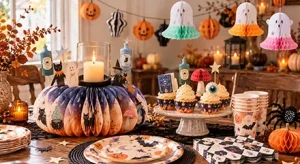
At the Sunbeauty booth, we spoke with importers, retailers, brand owners and seasonal-product buyers from Europe and other international markets. Their questions revealed several practical opportunities for 2027: compact honeycomb tabletop decorations, recognisable seasonal symbols, coordinated paper fan sets and display products that give retailers more than one selling or styling option.
This article is based on conversations held at our booth during the Canton Fair from 23 to 27 October 2026. These observations are first-hand buyer signals rather than statistics for the whole market.
What changed in buyer conversations about 2027 paper Christmas decoration trends at Canton Fair 2026?
One message appeared in several conversations: buyers wanted the paper craft itself to remain the main feature.
Additional accessories were only attractive when they improved function, presentation or ease of use. Decorative components that added cost but did not improve the product were more likely to be questioned.
This matters commercially. A design with fewer unnecessary parts can simplify assembly, reduce packing complexity and make the original paper structure easier to understand. It can also give a brand more control over colour, shape, printing and seasonal storytelling.
For buyers planning a new range, this suggests a useful starting point: invest first in the paper structure and visual identity. Add accessories only when they create a genuine function or a stronger retail experience.
Six paper decoration opportunities for the 2027 season
1. Honeycomb tabletop decorations that can grow into a collection
Small and medium-sized honeycomb tabletop decorations attracted attention because they are easy to understand at retail and flexible enough to build into a coordinated range.
A retailer can begin with a few recognisable forms, such as Christmas trees, angels, bells or winter characters, and then extend the same colour system across different sizes. This creates a stronger shelf presentation than a group of unrelated products.
The commercial value is not limited to compact packaging. A consistent structure also helps buyers create good, better and best price levels without redesigning the whole collection. Size, paper colour, printing, finishing and packaging can be adjusted while the core paper construction remains familiar.
For distributors and private-label brands, this can reduce the amount of development work needed for future seasonal extensions.
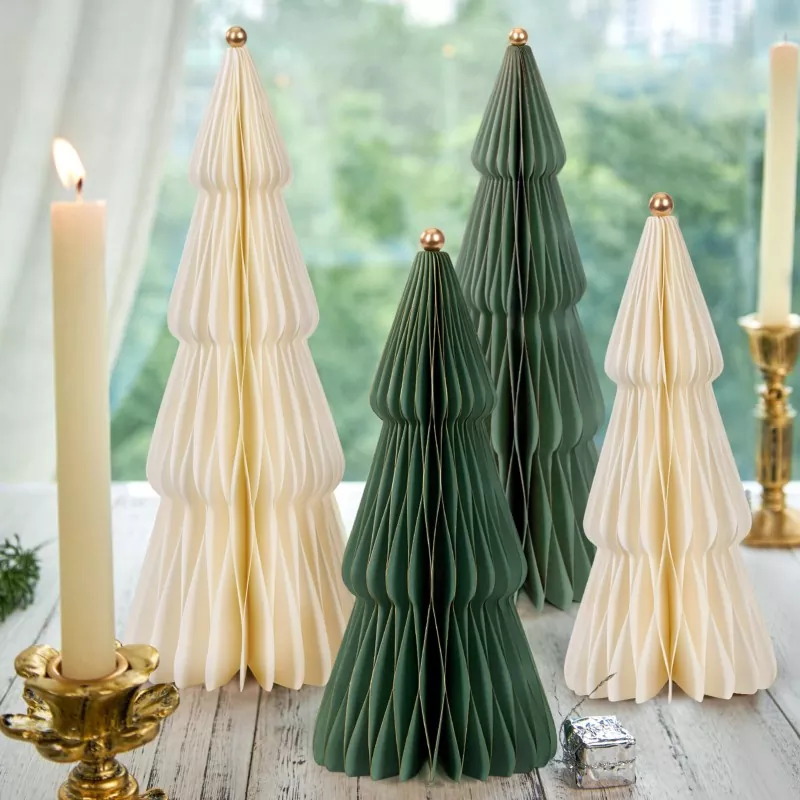
Explore wholesale paper Christmas ornaments
2. Angels and ghosts show how one structure can serve different seasons
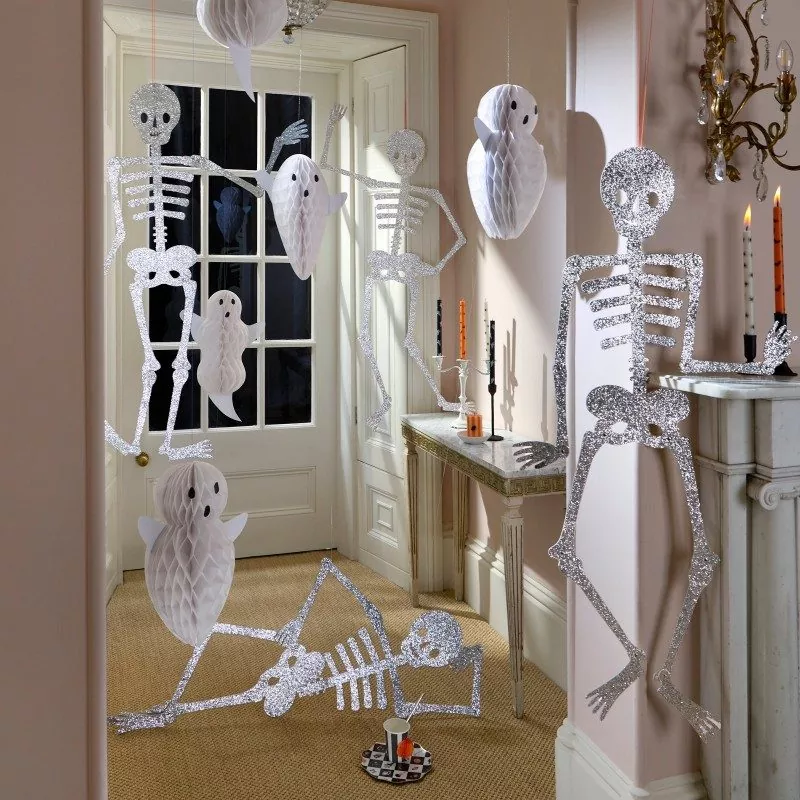
Angels and ghosts received frequent attention at our booth. Although they belong to different selling seasons, they share the same commercial logic: a simple paper structure is transformed into an instantly recognisable seasonal character.
For Christmas and winter collections, angels can work as hanging ornaments, tabletop decorations or elements within a neutral white-and-gold range. Ghosts apply the same design principle to Halloween and autumn retail.
This gives buyers a development advantage. A successful folding or honeycomb construction can be adapted to more than one season through changes in silhouette, colour, facial detail and packaging. The result is not one product repeated in different colours, but a reusable design platform.
Buyers developing several seasonal programmes can therefore review structural concepts across the full calendar rather than treating every holiday as an isolated project.
3. Paper fan sets work best when the colour story is already solved
Paper fan decoration sets were well received because they give retailers and event suppliers an immediate visual result. The buyer is not purchasing one paper fan; they are purchasing a coordinated backdrop or display solution.
The strongest sets usually combine several diameters, balanced colours and enough variation to create depth. A well-planned set reduces the styling work required by the retailer and keeps product photography, packaging and social content visually consistent.
For private-label programmes, the main opportunity is not adding more pieces. It is developing a colour and size combination for a specific use case, such as a Christmas window, winter wedding, retail launch, hospitality event or seasonal photo area.
Custom sleeves, branded inserts and coordinated retail packaging can then turn the set into a complete product rather than a loose collection of decorations.

4. A Christmas train is a retail experience, not only a paper product
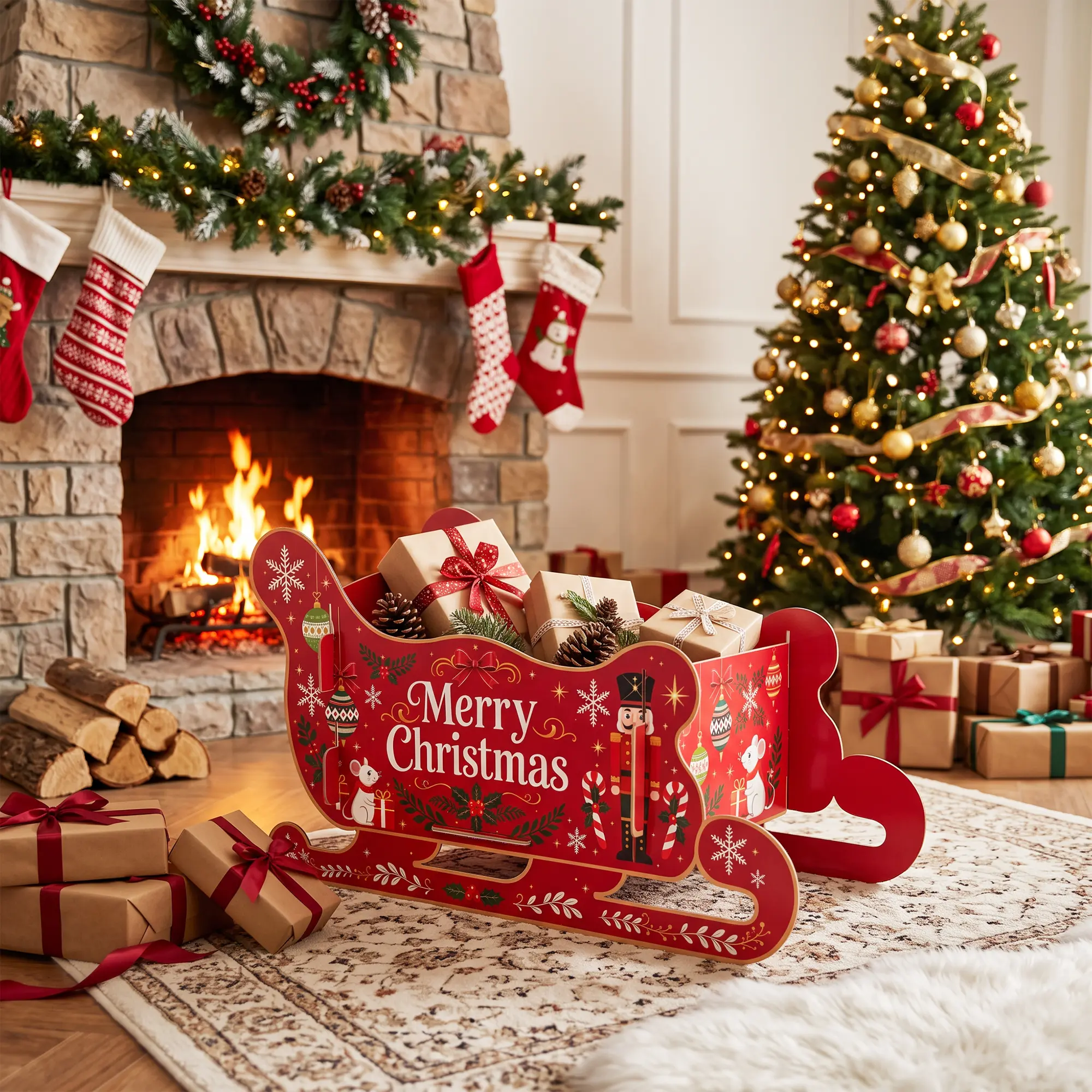
A large paper Christmas train serves a different commercial purpose from small hanging ornaments. It can become a photo prop, a present holder, a shop-window feature or part of an experiential Christmas installation.
Its value therefore depends on the experience it creates and the date on which the buyer can begin using it—not only on its production cost.
Sunbeauty previously developed a custom Christmas train for UK client Antony Kilgall
en of Creative Legacy Ltd. The project had a fixed seasonal delivery window. The train needed to arrive before the client’s Christmas programme began, leaving enough time for inspection, assembly, photography and customer bookings.
We completed the custom train and delivered it before the Christmas season. Our project follow-up showed that the client was satisfied with both the finished result and the delivery support.
The project highlighted an important lesson for seasonal buyers: the factory completion date is not the true commercial deadline. The product may still need to be shipped, checked, assembled, photographed and introduced to staff before the customer ever sees it.
When planning a custom Christmas display, start with the date on which the product must be operational and work backwards from there.
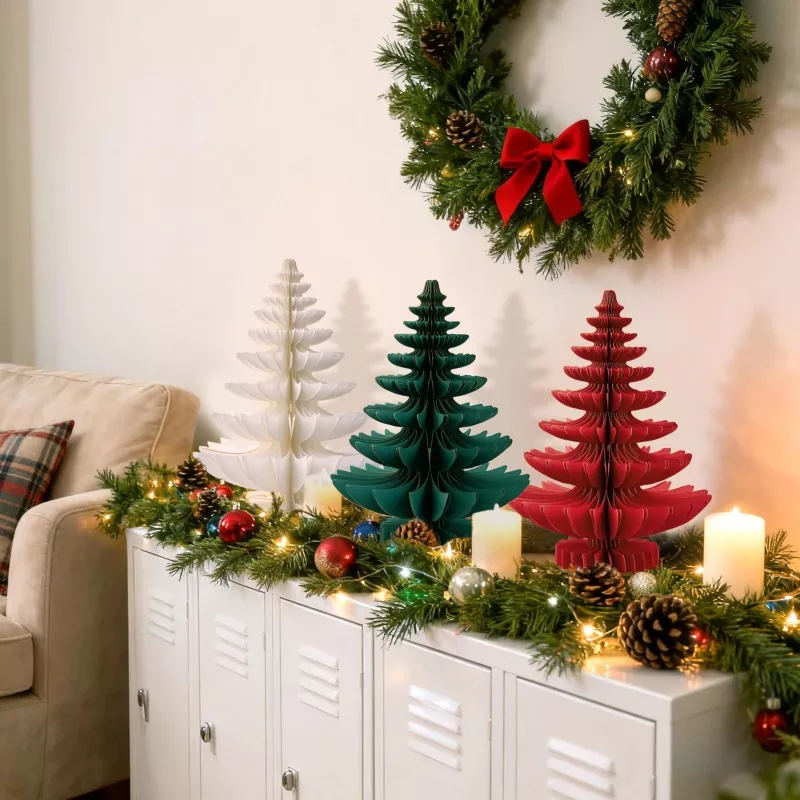
5. Small honeycomb Christmas trees are easier to merchandise across channels
Large commercial trees create impact, but smaller honeycomb Christmas trees offer a different advantage: they can fit into more retail formats.
A small tree may be sold as a tabletop decoration, used in a shop window, included in a gift display or combined with ornaments and paper fans. The same collection can serve department stores, independent retailers, online sellers and event companies with only limited packaging adjustments.
For buyers testing a new design direction, smaller trees also make it easier to compare colours, surface finishes and pack formats before extending the concept into larger display pieces.
The most effective range is rarely built from one tree alone. A stronger programme may combine two or three heights with matching angels, ornaments or tabletop forms.
View Sunbeauty’s wholesale Christmas decoration range
6. Coordinated collections can outperform isolated seasonal items
One of the most useful conclusions from our Canton Fair conversations was that buyers were often evaluating how products could work together.
A honeycomb tree may attract attention, but a coordinated range gives the retailer more ways to merchandise it. The tree can become the centrepiece, while angels, paper fans, hanging ornaments and smaller tabletop pieces complete the colour story.
This approach also allows different products to serve different commercial roles. Smaller pieces can support entry prices and impulse purchases. Core tabletop decorations can carry the main sales volume. A train or large display piece can provide the visual story that brings shoppers to the collection.

A practical range structure for 2027 buyers
| Range role | Suitable products | Commercial purpose |
|---|---|---|
| Entry | Small ornaments and hanging decorations | Accessible price points and add-on purchases |
| Core | Honeycomb tabletop decorations and small trees | Main seasonal range and repeatable colour stories |
| Story | Paper fan sets, angels and coordinated displays | Creates visual consistency across the collection |
| Statement | Christmas trains and large display pieces | Generates attention, photography and customer interaction |
This structure does not require every buyer to order every product type. Its purpose is to identify the role each item plays before development begins. It helps prevent a collection from becoming a group of attractive products with no clear price or merchandising hierarchy.
Why delivery planning should begin with the selling date
For a standard Christmas programme, beginning development around six months before the required delivery period gives the buyer more room for sampling, revisions, packaging development, production and shipping.
Many Sunbeauty customers also begin three to four months before launch. These projects can still be managed, especially when they use an existing structure, established materials or private-label packaging. However, the available options depend on quantity, customisation, testing requirements and shipping method.
When the schedule is tight, modifying a mature product is often more reliable than opening a completely new structure. Colour, print, packaging and product combinations can still create a distinctive range without placing every part of the project on the critical path.
A useful planning question is not simply, “When can production finish?” It is, “When must the goods be ready for photography, distribution, staff preparation and retail launch?”
What our MUJI and Eulenschnitt projects taught us
Seasonal product development becomes more reliable when the supplier can translate a brand idea into a stable paper structure.
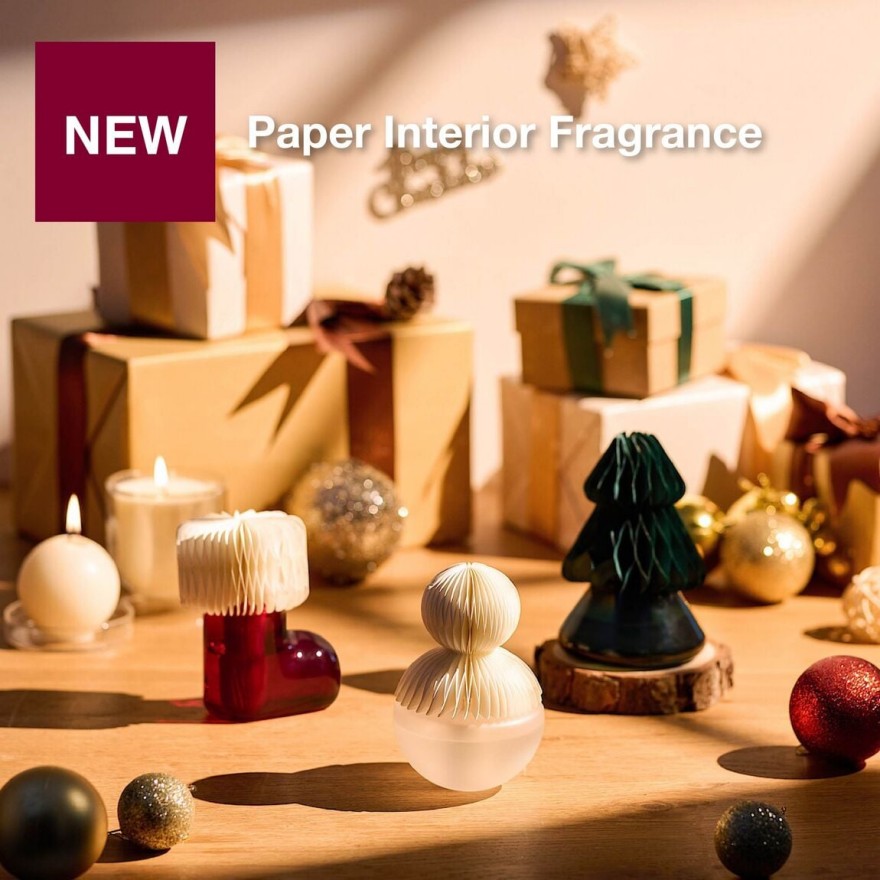
For a honeycomb paper diffuser project developed for MUJI, our work included interpreting the design direction, selecting suitable paper, adjusting the honeycomb structure, comparing closure methods and refining the prototype for production.
The value of this process was not the brand name alone. It demonstrated how a simple paper concept could be developed into a functional, repeatable product while protecting the visual language of the customer.
Read the MUJI honeycomb paper diffuser case study
Our customised paper star project for Eulenschnitt required a different approach. Shape, folding performance, colour and presentation needed to work together as part of the brand’s seasonal assortment.
Together, these projects show why buyers should assess more than the final sample. The development process must also consider repeatability, packaging, user handling and consistency during mass production.
Read the customised paper star case study
Responsible sourcing and market-specific requirements
Certification and compliance requirements vary by market, product type and sales channel. Around 90% of the Sunbeauty range can be developed using the certified materials, factory audit support or documentation commonly requested by our customers. The exact scope should still be confirmed for each project.
FSC-certified paper options can be provided for suitable products. BSCI and SMETA relate to factory social-responsibility and management audits rather than certification of an individual decoration. PPWR is an EU packaging regulation, not a product certificate, so packaging should be assessed against the buyer’s market and chosen configuration.
Flame-retardant paper and related test documentation are available for selected products and structures. They do not automatically apply to every item.
Send us your destination market, selling channel and required documentation at the beginning of the enquiry. We can then assess the appropriate material, packaging and testing route before sampling.
Questions to settle before requesting samples
A productive sample request should explain where the product will be sold, how it will be used and when it must be ready. The most useful starting information includes the target market, product category, preferred size and colour direction, estimated quantity, packaging format, delivery date and any testing requirements.
This allows the development team to recommend an appropriate route instead of quoting a product that may not suit the buyer’s price, schedule or channel.
Frequently asked questions
What paper Christmas decorations can Sunbeauty customise?
Sunbeauty can evaluate custom honeycomb decorations, paper fans, hanging ornaments, tabletop pieces, paper stars, small Christmas trees, seasonal characters, display props and coordinated decoration sets. Available customisation depends on the structure, quantity, schedule and target market.
Can we use an existing product for private-label development?
Yes. For a shorter development schedule, buyers can begin with an established structure and customise its colours, printing, packaging or product combination. This is often more efficient than opening a completely new construction.
When should buyers begin developing a 2027 Christmas collection?
A six-month planning window is recommended for projects involving new structures, several samples, special packaging or market-specific testing. Projects beginning three to four months before launch may still be possible when mature structures or available products are used.
Can FSC-certified paper be used?
FSC-certified paper options are available for suitable products. Please provide the destination market and documentation requirements so the correct material and certificate scope can be evaluated.
Does Sunbeauty support European packaging requirements?
Paper and packaging configurations can be assessed against buyer-specific requirements, including relevant PPWR considerations. PPWR is a regulation rather than a certification, so the assessment depends on the market and final packaging design.
Plan your 2027 paper decoration range
If you are preparing a Christmas collection for retail, distribution, events or private label, send us your target market and intended launch date. We can help you evaluate the product mix, customisation route, packaging plan and production schedule.
Request a 2027 Paper Decorations Range Plan
To receive a more relevant recommendation, include your company website, destination market, product types, estimated quantity, target price level, customisation requirements and required delivery date.